MidJourney Prompt Guide: Write Better Prompts, Create Stunning AI Art
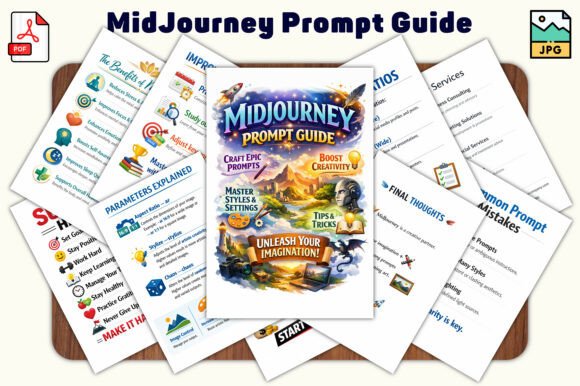
If you have spent any time experimenting with MidJourney, you already know this much: the difference between a forgettable image and a breathtaking one often comes down to the prompt. A few carefully chosen words can transform a flat, generic output into something that feels composed, lit, and emotionally resonant. That is exactly where the MidJourney Prompt Guide steps in. This isn't a dry technical manual. It is a thoughtfully designed, 37-page resource built for anyone who wants to move past guesswork and start generating AI artwork that actually looks intentional.
The guide walks you through how MidJourney processes language, how to structure prompts for clarity and impact, and how to select style, lighting, and color mood with confidence. Whether you are designing a brand identity, creating social media visuals, or exploring fantasy and sci-fi concepts, the approach here is practical and repeatable. The clean layout, paired with JPG versions of every page, makes it easy to reference on a second screen or print for quick use. It feels less like a textbook and more like a trusted creative partner sitting beside you.
What Makes the Guide Distinctive
The first thing you will notice when you open the MidJourney Prompt Guide is how intentionally it is laid out. Each page is clean, uncluttered, and structured so that you can scan quickly and apply what you learn immediately. The 6 × 9 inch format is compact enough to keep open next to your workspace, yet spacious enough to include real examples, prompt templates, and breakdowns of what works and why.
The personality of this guide is encouraging without being fluffy. It assumes you are capable and curious, and it meets you there. The visual style is modern but approachable, with clear hierarchies that make it easy to distinguish between core concepts, examples, and notes. This matters because when you are iterating on prompts, you need information fast. You do not want to hunt through paragraphs of theory to find the one parameter that fixes your composition. The guide respects your time by putting the actionable details front and center.
There is a quiet confidence to the way the content is organized. It does not try to impress you with jargon. Instead, it builds your understanding step by step, starting with how MidJourney interprets language and moving into specific techniques for portraits, landscapes, branding, and more. By the time you reach the later pages, you are not just copying templates — you are adapting them to your own vision.
Where the Guide Delivers the Most Value
This resource shines across several creative and commercial contexts. For graphic designers and digital artists, the prompt structure lessons and style parameters help bridge the gap between a loose idea and a polished visual. You can use the guidance on lighting, color mood, and composition to generate base images that require less post-processing and more closely match your original intent.
For print-on-demand sellers and entrepreneurs, speed and consistency matter. The guide includes specific prompt templates for branding, logo concepts, and social media graphics that can be adapted for different products or campaigns. Instead of starting from zero every time, you have a reliable framework that produces professional-looking results with fewer iterations.
Content creators and social media managers will appreciate how the guide addresses aspect ratios, parameters, and common mistakes. If you have ever generated an image only to realize it does not fit your Instagram feed or YouTube thumbnail dimensions, the section on aspect ratios alone will save you hours of frustration. The guide also covers how to fix common issues like unwanted artifacts, awkward compositions, or inconsistent lighting, which means you spend less time troubleshooting and more time publishing.
For bloggers, publishers, and small business owners, the ability to generate custom visuals without hiring a designer is a real advantage. The guide gives you the vocabulary and structure to describe what you need clearly, even if you have no formal design training. Over time, this builds a kind of visual fluency that carries over into every project you work on.
How It Influences Your Creative Workflow
One of the most valuable things the MidJourney Prompt Guide does is shift how you think about prompts. Instead of treating them as one-shot commands, you start seeing them as iterative tools. You learn to layer in style references, adjust lighting cues, and fine-tune color palettes in ways that feel deliberate rather than random.
This has a direct impact on visual hierarchy. When you understand how certain keywords influence where the AI places emphasis, you can guide the viewer's eye more effectively. A prompt that begins with a strong subject and adds environmental context in a logical order will produce images that feel composed rather than chaotic. The guide gives you the syntax to do this consistently.
Brand perception also benefits. If you are creating visuals for a business or personal brand, being able to generate images with a consistent mood, color palette, and level of polish builds recognition over time. The guide helps you establish a baseline for your brand's visual identity and then adapt it across different formats without losing coherence.
There is also a professional confidence that comes from understanding the tools you are using. When you know why a prompt works, you can repeat that success intentionally. You are not relying on luck. You are making creative decisions based on a clear mental model of how the AI interprets your input. That shift from reactive to intentional is where the real growth happens.
Practical Guidance for Getting the Most Out of It
If you are new to MidJourney, the best approach is to work through the guide sequentially. The early pages on how the AI processes language and how to structure a clear prompt will save you from developing bad habits. Spend time with the prompt templates, but treat them as starting points rather than final answers. The real value comes when you start modifying them to fit your specific subject, mood, and format.
For more experienced users, the sections on advanced parameters, common mistakes, and niche applications like fantasy and sci-fi will likely be the most useful. Skim the basics and focus on the areas where you know your prompts could be stronger. The guide is structured so you can jump around without losing context, which makes it practical for ongoing reference.
Testing your prompt variations is part of the process. The guide walks you through how to iterate without starting over each time, which is one of those small workflow improvements that adds up fast. You will also find guidance on evaluating your results critically, so you can identify what is working and what needs adjustment.
If you plan to use the guide across a team or for commercial client work, the format makes it easy to share. The PDF and included JPG files work well across devices, and the page size is comfortable for both screen reading and printing. No prior AI experience is required, but even seasoned users will find plenty of depth to explore.
A Resource Built for Real-World Use
The MidJourney Prompt Guide does not promise to turn you into an instant expert. What it does is more honest and more useful: it gives you a clear path to get better, one prompt at a time. The examples are grounded, the templates are practical, and the structure encourages both learning and experimentation.
For designers who want to expand their toolkit, entrepreneurs who need reliable visuals at scale, and creators who are tired of wrestling with inconsistent results, this guide hits a sweet spot. It is thorough enough to teach you something new every time you open it, and compact enough to stay within arm's reach while you work.
If you have been relying on trial and error or copying prompts from social media without understanding why they work, this guide offers a better way. It builds your skills, your confidence, and your ability to generate AI art that looks like it was made on purpose. And that is exactly what separates good work from work that truly stands out.