Easy Everyday Baking Cookbook: A Practical Guide for Building Baking Confidence
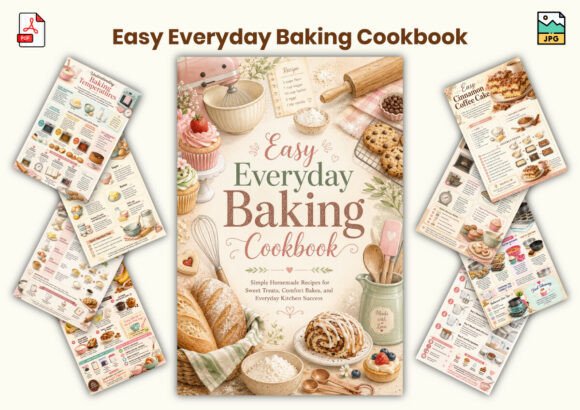
Baking is as much about technique and understanding as it is about following a recipe. For beginners, the learning curve can feel steep, and even experienced home bakers occasionally benefit from a structured refresher on fundamentals. The Easy Everyday Baking Cookbook addresses this gap by offering more than a collection of recipes—it functions as a teaching tool, planner, and reference resource wrapped into a single, visually cohesive package. Designed as a 31-page cookbook and workbook, it aims to help users build practical baking skills while developing a reliable, repeatable process in the kitchen.
What sets this resource apart from standard recipe collections is its deliberate focus on education and organization. Rather than simply listing ingredients and steps, the cookbook integrates baking science, measurement techniques, equipment guidance, and planning pages that encourage users to reflect on their progress. The soft pastel bakery aesthetic gives it an approachable, polished feel, making it suitable for both personal use and professional product offerings. This article examines the cookbook's structure, practical value, potential limitations, and who may benefit most from incorporating it into their kitchen workflow or creative business.
What Makes the Easy Everyday Baking Cookbook Worth Examining
The Easy Everyday Baking Cookbook is not a traditional cookbook in the sense of being a thick volume of hundreds of recipes. Instead, it is a concise, purpose-built workbook that emphasizes skill development and kitchen confidence. Its 31 pages are organized around several distinct content types: recipe pages, educational guides, action plans, checklists, infographics, tips and tricks pages, interactive reflection pages, and summary review pages. This variety suggests that the cookbook was designed with deliberate thought about how people actually learn and retain baking skills.
One of its more notable characteristics is the balance between instruction and application. Users are not just told what to do—they are given space to plan, reflect, and adjust. The inclusion of action plans and reflection pages indicates a design philosophy that values iterative learning. This structure may be particularly effective for those who struggle with baking outcomes and need a systematic way to diagnose issues, track improvements, and build repeatable habits.
The visual presentation also deserves attention. The soft pastel bakery aesthetic is consistent throughout, with a clean layout that does not sacrifice readability for style. Page size is 6 by 9 inches, which is compact enough for practical use in the kitchen while still offering sufficient space for content. Both PDF and high-quality JPG files are included, which provides flexibility for printing, digital use, or integration into other projects.
Strengths in Content and Structure
The educational content covers a broad range of foundational topics. These include essential baking ingredients, tools and equipment, measuring techniques, oven basics, mixing methods, baking science, ingredient substitutions, storage tips, recipe customization, and baking organization and planning. This scope is comprehensive enough for a beginner to gain a solid grounding while also offering value to more experienced bakers who may want to systematize their approach or revisit fundamentals.
From a usability standpoint, the inclusion of multiple content formats is a practical strength. Checklists, infographics, and tips pages provide quick-reference material that can be consulted during active baking. Action plans and reflection pages encourage users to think critically about what worked and what did not, which supports long-term skill retention. The summary review pages at the end likely help reinforce key takeaways, making the workbook function almost like a mini-course rather than a static reference.
The recipe pages themselves appear to be designed with clarity in mind, though the cookbook does not position itself as an exhaustive recipe collection. Instead, the recipes serve as practical applications of the techniques and principles covered in the educational sections. This integrated approach may help users understand not just how to make a particular item, but why certain methods and ingredients work the way they do.
Practical Value in Real-World Use
In actual kitchen use, the Easy Everyday Baking Cookbook offers a structured framework that can be adapted to individual needs. For a beginner baker, the cookbook provides a clear progression from understanding ingredients and tools to planning and executing recipes. The checklists and action plans reduce the cognitive load of remembering every step, which can make the difference between a frustrating experience and a successful one.
For someone who bakes regularly but inconsistently, the reflection pages and organization guides can help establish a more reliable workflow. The storage tips and ingredient substitution guides also offer practical problem-solving value when things do not go as planned. Having a dedicated space to document adjustments and outcomes can turn occasional baking into a more deliberate learning process.
The cookbook's format also lends itself well to repeated use. Because it includes reflective and planning components, users can revisit pages for different recipes or as their skills develop. The digital file format means it can be printed multiple times or used on a tablet, which extends its lifespan beyond what a single-use workbook might offer.
Quality, Usability, and Flexibility
The design quality appears consistent with what one would expect from a professionally prepared digital resource. The PDF and high-quality JPG files are provided, which gives users control over how they access and present the material. The 6 by 9 inch page size is practical for both printing and digital viewing, and the soft pastel theme is visually appealing without being distracting.
Flexibility is another notable strength. Because the cookbook is provided as a downloadable file, users can print individual pages as needed, combine them with other resources, or use them as components in larger projects. For content creators and educators, the ready-to-use format saves significant design time while still offering a polished final product. The inclusion of both PDF and JPG formats also accommodates different use cases, from direct printing to integration into digital courses or social media content.
The interactive reflection pages add a layer of personalization that is often missing from standard cookbooks. By encouraging users to record their observations, challenges, and successes, the workbook creates a personalized learning record that can be referenced later. This feature may be particularly valuable for those teaching baking skills to others, as it provides a structured way to track progress.
Who Benefits Most and in What Situations
The Easy Everyday Baking Cookbook is best suited for specific audiences rather than being a one-size-fits-all resource. Beginners and home bakers who feel uncertain about their technique or results will likely find the educational content and planning pages most useful. The structured approach reduces the guesswork that often discourages new bakers.
Content creators, educators, and small business owners may also find significant value here. The cookbook can be used as a ready-made resource for baking courses, printable product lines, or educational materials. The professional layout and cohesive aesthetic mean that it can be offered as a stand-alone product or integrated into larger offerings without requiring extensive redesign. For bloggers and publishers, the cookbook provides a template that can be customized or used as inspiration for developing related content.
Freelancers and entrepreneurs who create digital or printable resources will appreciate the time savings. Developing a 31-page resource from scratch requires substantial design and content work. Having a well-structured, visually consistent product that is ready to use allows creators to focus on marketing, distribution, or additional content development.
Professional Observations and Practical Considerations
From a professional standpoint, the cookbook's strength lies in its focused scope and intentional structure. It does not try to cover every possible baking scenario, but instead creates a repeatable framework that users can apply to a variety of recipes and situations. This restraint is actually a positive design choice—it keeps the resource manageable and actionable rather than overwhelming.
One realistic consideration is page count. At 31 pages, the cookbook is concise, which may leave some users wanting more depth on certain topics. For example, while baking science is mentioned, the level of detail is likely introductory rather than comprehensive. Users who already have a strong grasp of fundamentals may find the educational sections too basic. Similarly, the number of recipes included is limited given the page count, so those seeking a large collection of recipes may need to look elsewhere.
Another practical point is that the cookbook's effectiveness depends on user engagement. Reflection pages and action plans only provide value if users actually fill them out and refer back to them. For someone who prefers a more straightforward recipe book, the workbook format may feel like extra work. However, for those who are intentional about improving their skills, the structure is likely to produce better long-term results than a standard cookbook.
The cookbook is also format-dependent. While the digital files offer flexibility, users who prefer a physical book will need to print the pages themselves. The quality of the final printed product will depend on the printer and paper used, though the high-quality JPG files give users a good foundation to work with.
Long-Term Value and Effectiveness
When considering long-term value, the Easy Everyday Baking Cookbook holds up well as a reference that can be revisited over time. The educational guides, substitution charts, and storage tips remain relevant regardless of skill level. The reflection and action plan pages can be used repeatedly with different recipes, which extends the resource's useful life beyond a single use.
For educators and content creators, the cookbook can serve as a component in a larger curriculum or product line. Its modular structure means it can be supplemented with additional resources or updated as needed. The consistent design theme also makes it easy to pair with other materials without creating a disjointed user experience.
In terms of effectiveness, the cookbook is most likely to succeed with users who approach it with a deliberate mindset. Those who take the time to work through the educational sections, use the planning pages, and complete the reflection prompts will probably see more improvement in their baking consistency and confidence. For users who simply want to bake without the extra structure, the recipes and tips still offer standalone value, but the workbook's full potential will not be realized.
Final Thoughts on Fit and Practical Use
The Easy Everyday Baking Cookbook occupies a useful niche between a traditional recipe collection and a full baking course. It is not the right tool for someone who wants hundreds of recipes or advanced pastry techniques, but it is a well-designed resource for those who want to build a stronger foundation, organize their baking process, or create a polished product for their audience. Its professional layout, educational focus, and flexible format make it a practical option worth considering for both personal use and professional projects. As with any resource, the best fit depends on what you need to accomplish and how you prefer to learn.